

Hello, my friend! 👋
September has passed, marking the start of the final quarter of 2023–with 75% of the year already behind us. At the beginning of the year, I dedicated a considerable amount of time and energy to exploring innovations and breakthroughs in AI. However, due to work demands and the sheer rapid pace of developments in the field, I felt somewhat overwhelmed. Consequently, in the ensuing months until now, my engagement with AI has been limited to utilizing basic applications, such as working with ChatGPT to aid my professional tasks.
Nonetheless, the wheels of innovation don’t cease to turn just because I’ve shifted my focus elsewhere. For the remaining quarter of the year, rather than aiming for significant breakthroughs, I’ve decided to delve deeper into areas where I have expertise and have been actively engaged, seeking to realize small incremental improvements. For instance, in content creation, I’ve recently discovered that using a digital avatar could potentially enhance my current efficiency by 30%. Even slight improvements like this can lead to more practical and applicable use cases.
The truth is, that everyone approaches the use of such tools in a similar fashion. There isn’t always a need for a radical overhaul or to set sights on large-scale projects. Starting with small, everyday tasks and exploring how these tools can optimize and boost efficiency–even if it’s just by 10% or 20%–is worthwhile. That’s my little insight for the week :)

Here are a few things I’d like to share with you today 🙂
Showing ways of working to juniors
Documentary: Unknown - Cave of Bones
Finding Quality Articles to Read
A Hilarious Tech Tale
Have a great one and see you soon!
Showing ways of working to juniors
In the early years of my career, perhaps due to luck or other factors, I became a design team manager in that medium-sized manufacturing company I worked for, all while in my twenties. Owing to my job responsibilities, I frequently collaborated with another manager at the same level. We often traveled together and engaged with clients. He was in his forties, genuine in his demeanor, and had a wonderful personality. Though he never made it a point to mentor me, I inadvertently picked up numerous problem-solving skills and methods from him.
Looking back, his influence on my professional journey felt like that of a mentor. I particularly admired his comprehensive approach to problem-solving. Compared to my younger, impulsive, and sometimes narrow-minded way of thinking, his thought process was far more holistic. Today, I’ve reached the age he was back then, realizing that this holistic mindset and accumulation of experience is the wealth bestowed by time. Now in my forties, the passage of time and the experiences it brought have naturally endowed me with a similar perspective.
On the other hand, I’ve started to wonder how the younger professionals, in their twenties, view me. Their perspective might echo how I once saw that older manager. This reflection often reminds me to always share my thought process and experiences, especially when interacting with the younger generation. After all, there’s always a new cohort observing, learning, and ready to pass these experiences forward.
Whether it was my earlier days in a second-tier city’s private enterprise in China, or now, in a tech company listed in the Southern Hemisphere, the challenges faced are intriguingly alike. Though the actual problems we tackle and the software we use have evolved over the past decade or so, the methodologies and soft skills required remain strikingly similar. It’s genuinely fascinating.

Documentary: Unknown - Cave of Bones
When I first watched the documentary “Unknown: Cave of Bones”, I didn’t expect it to have such a profound impact on me. Not only did it challenge my traditional understanding of what it means to be “human”, but it also made me re-evaluate our place in the vast cosmos. The events took place in South Africa. A few years ago, an archaeological team there found startling evidence of a new type of human - the Naledi. They lived before the Neanderthals, roughly 250,000 to 300,000 years ago. At first, this discovery wasn’t particularly surprising to me until the documentary revealed an unusual ritual of the Naledi people.
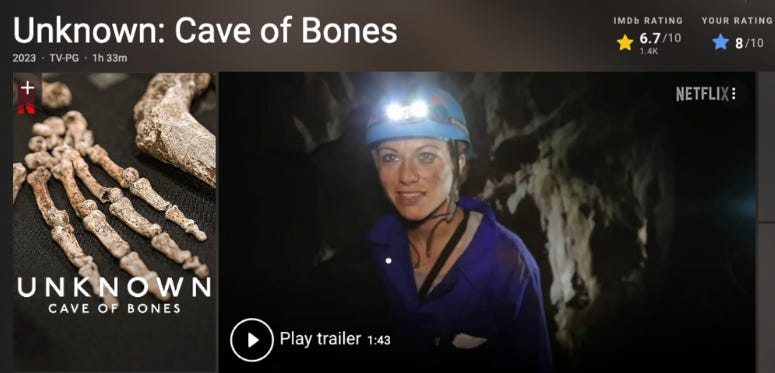
This primitive group had a startling practice: when one of their kin passed away, they would painstakingly navigate through narrow, dark cave passages to bring the deceased to the deepest parts of the dark caves. Not only did they bury their departed, but they also laid down tools they had used. This ritual suggests that attributes once thought to be unique to Homo sapiens, such as tool-making, hunting, contemplation, and reflections on death and the afterlife, were already present in this ancient Naledi race. It’s a chilling revelation that makes us rethink our position on the tree of life. The documentary presents this discovery in an engaging manner. The cameraman bravely followed the archaeologists through the narrow caves, a journey reminiscent of returning to a mother’s womb. When they emerged back into the sunlight, I felt a deep resonance with this being, slightly different from us. While the documentary lasts only an hour, its impact lingers. I highly recommend it to everyone as it challenges our inherent perceptions of what it means to be “human” and prompts us to reconsider our place in the world.
Finding Quality Articles to Read
A few days ago, I posed a question on Twitter: Where can I find quality articles written in Chinese? Unfortunately, I didn’t receive a countable source. I’ve found that reading insightful articles is an effective way to elevate the quality of information I consume. While books are great for in-depth exploration on specific topics and offer a slower pace, social media often fails to provide any substantial depth. Broadening the query, the question becomes: How does one find and read high-quality articles?
Finding English articles is relatively straightforward. With browser extensions installed, I can instantly access top-tier content from publications like The Economist, Wired, and Bloomberg. I can even save these articles to Readwise Reader and have them translated for a bilingual (English-Chinese) reading experience. My aim is to read a thought-provoking article daily and share my insights. This practice not only refreshes my knowledge but also gives me content to share and fodder for my Newsletter. For Chinese content, I’m starting with articles from Sanlian Life Weekly, and I’ll gradually expand my sources.
My current workflow for deep reading is as follows:
Sourcing: Set aside dedicated time each week to explore my sources.
Access: Use the Paywall bypass to read articles in full (as much as I’d love to, I can’t afford to subscribe to every premium outlet).
Translation: Use an immersive reading plugin to generate bilingual translations.
Storage: Save articles to Readwise Reader for easy access.
Reading: Allocate time daily to read one article. Highlight noteworthy sections directly.
Summary: Once done, I verbally summarize my takeaways and impressions. Then, I utilize ChatGPT for editing, share my insights, and archive them in Notion.
Review: To reinforce memory, I revisit my highlights daily through Readwise notes.
Seems like a perfect system to me!

A Hilarious Tech Tale
While reading a book about tech industry in 80’s, I found an old tech story that left me in stitches:
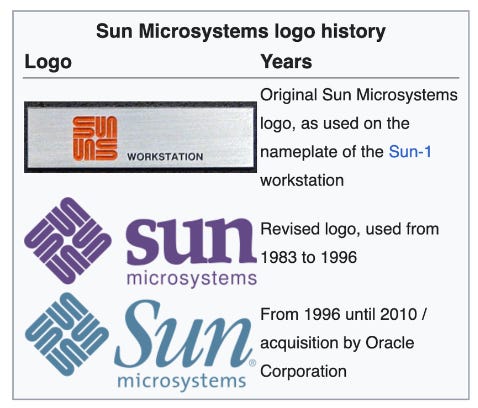
After Steve Jobs was ousted from Apple, he went on to start his own venture, producing the NeXT computer. His spending was lavish, even dropping $100,000 just on creating a logo.
Meanwhile, Sun Microsystems, a direct competitor, took the exact opposite approach. They adopted a minimalist, engineer-like mindset, sparing every penny they could.
Their most significant expense? Spending $3,000 to hire a designer to create a new logo. However, the designer later suggested tilting the logo to give it a slant. Sun’s penny-pinching boss, Andy Bechtolsheim, didn’t want to waste the freshly printed business cards (which had the logo upright). So, Andy came up with a middle-ground solution: instructing employees to hand out their business cards at a tilted angle.
I couldn’t stop laughing!
But seriously - from a design perspective, a slanted logo does bring a certain dynamism, a sense of instability that symbolizes the ever-evolving nature of technology, which suits the industry perfectly.
As a side note, the Nazis used this idea of instability in their emblem, leveraging its unsettling effect to stir emotions (that’s another story).

Bear Academy Newsletter
Non-crap tips and thoughts on design, product and technology ✨
🐻 Bear Who?
Hi there 👋, I’m Bear, a seasoned Product Designer with 15 years of overall design experience and six years in product design, transforming the user experiences for millions 📝
As an Apple Award-Winning Podcast Host at BearTalk and a Design Mentor at Springboard and CareerFoundry, I apply my self-taught design skills and science background to solve complicated problems and mentor budding designers 😃
In my downtime, you’ll find me reading, drawing, podcasting, and making videos about everything from tech to design and productivity 👨🎨
🤓 Work
💼 What I do:Product Designer at Xero
🌃 I also do:Design Mentor at Springboard and CareerFoundry / Founder at Bear Academy
🎤 Side hustle:Podcast host at Award-winning podcast BearTalk
💡 Goodies
Bear Academy - my courses around UX Design, AI, etc
Bear Academy Newsletter - my free newsletter, which you are reading now
Beartalking.com - all my posts, English and Chinese
Youtube.com/@Bearliu - A video is worth a thousand words
💬 Contact
https://twitter.com/bearbig - Majorly I post in Chinese
bear@beartalking.com - The old fashion email way
LinkedIn.com/in/bearliu - My professional life