

Raycast has 2,500 extensions, and that number tells you almost nothing about whether the platform underneath is healthy.
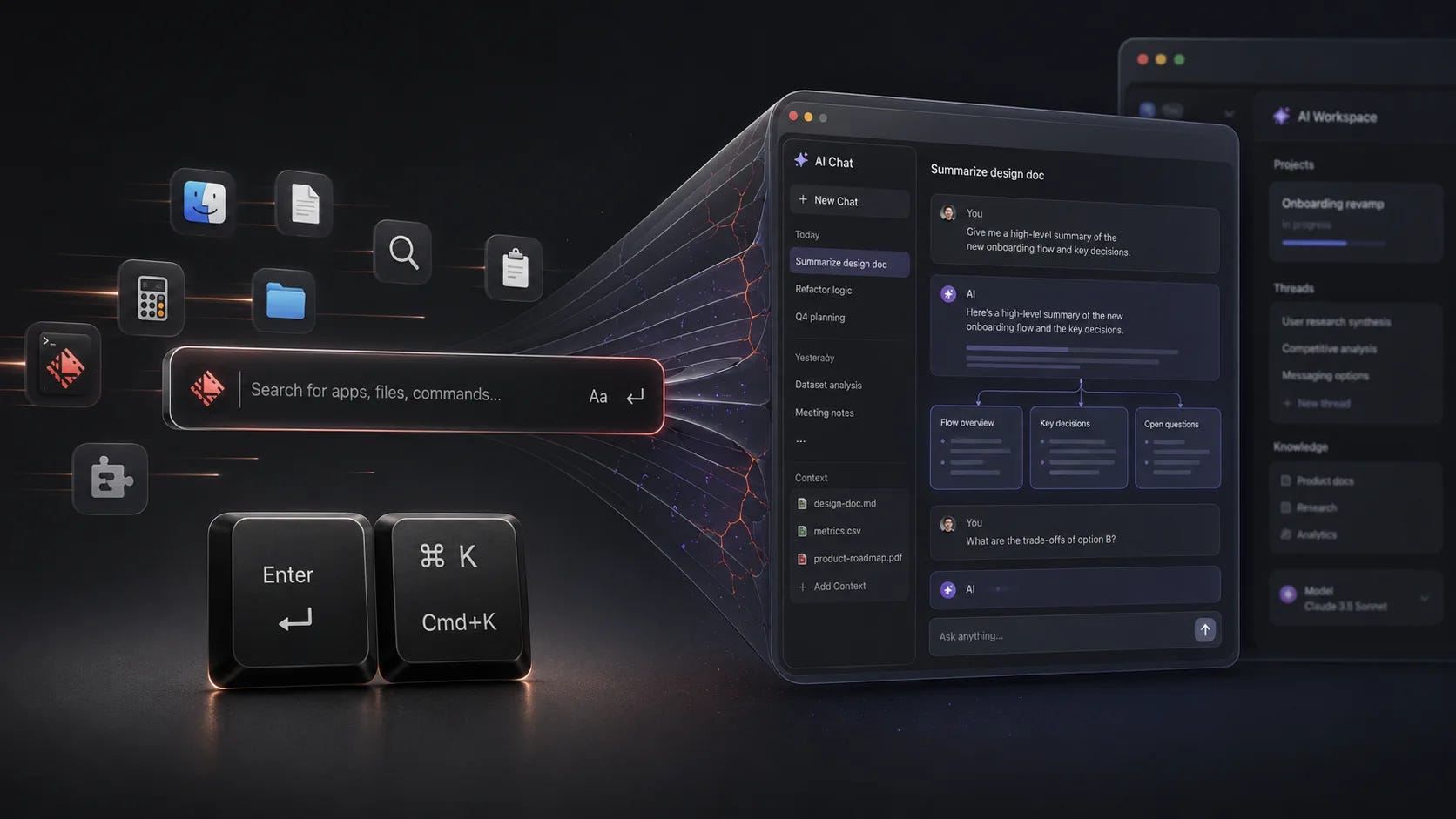
Some of what I do at a computer I am aware of doing. Most of it I am not. The clearest example is a keyboard shortcut. Control and space, a small input box appears, I type three or four letters, and the app or the file or the next job is in front of me.
That box belongs to Raycast, and it stopped being a decision a long time ago. It sits somewhere near unlocking a laptop with a fingerprint. I no longer think about it any more than I think about breathing.
No habit arrives out of nowhere, though. That one was designed.
Raycast has more than 2,500 extensions, and that number is doing a lot of work in how people talk about its moat. This issue is about what the number does not tell you.
The consistency is real
Raycast extensions are open source, written mostly in TypeScript and React, and built with Raycast’s own component library.
That constraint buys something valuable. Chrome extensions let developers use any web technology they like, so quality and interface vary wildly. Raycast controls the components and interactions an extension can use, so third-party work usually looks and behaves like a native feature.
The Color Picker extension has around 450,000 installs and 613 contributors. Simple to install, consistent to use, direct enough to be worth having. That is exactly what a healthy platform hopes to show off.
One star extension with 450,000 installs does not prove the ecosystem behind it is healthy.
What the distribution says
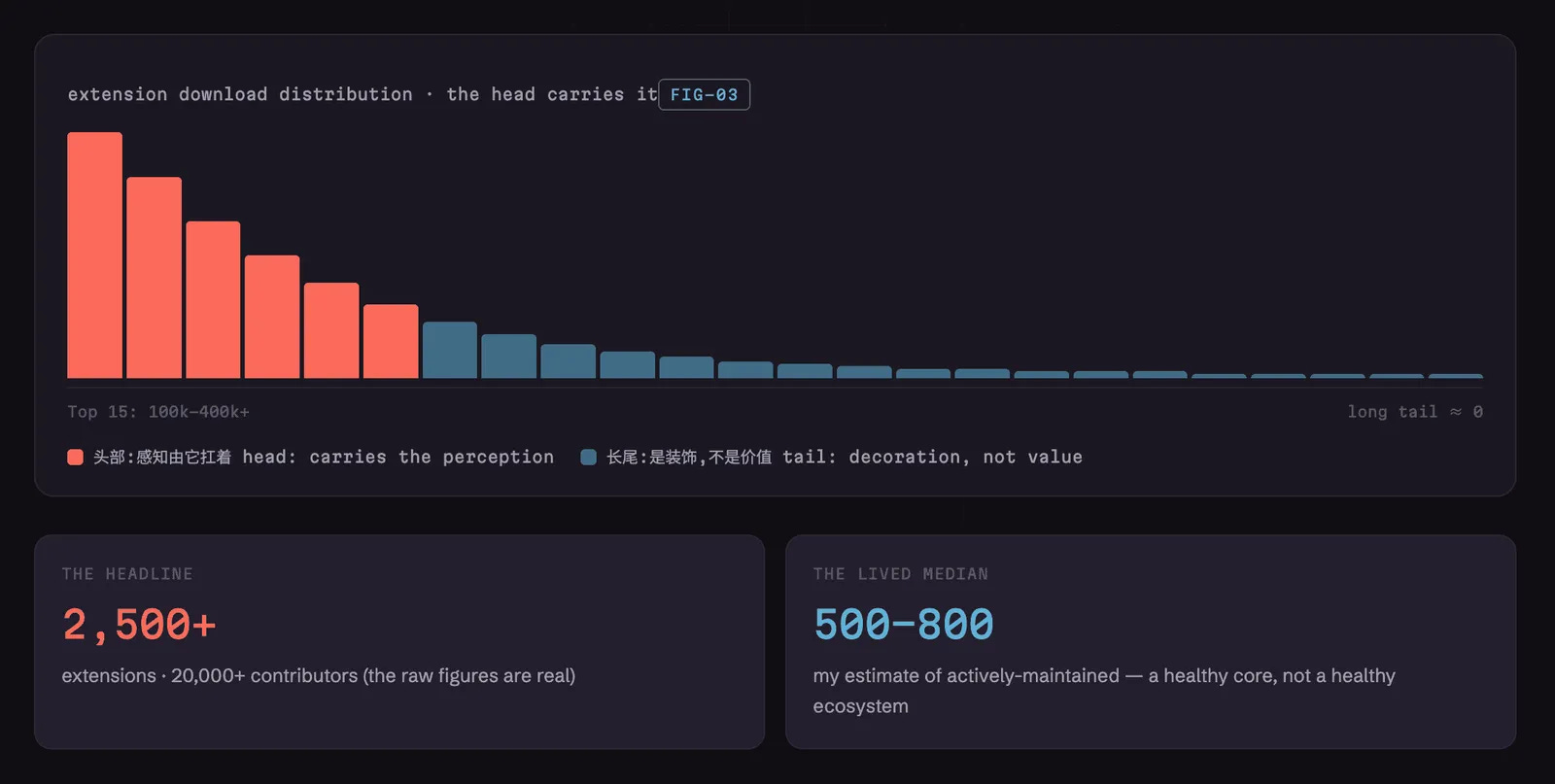
Public download rankings show the top 15 extensions mostly sitting between a hundred thousand and four hundred thousand installs. After that the numbers fall away quickly into a long, low-activity tail.
Raycast’s own extension guide has a section on abandoned extensions. When a maintainer stops responding, the team steps in after three failed attempts to reach them. A platform does not write that policy unless it needs it.
So when I judge an extension ecosystem now, the total count is the last thing I look at. Three other signals tell me more.
The distribution between head and tail. If the top 20 hold the overwhelming majority of installs, the long tail may be worth very little to an ordinary user.
The update frequency. How many extensions have been touched in the past six months? Sitting in a store is not the same as still running.
The rate of new developers arriving. Are new contributors showing up fast enough to replace the ones who stop maintaining?
On the figures I can see, my estimate is that somewhere between 500 and 800 extensions are genuinely, actively maintained. Still a valuable core, and a completely different thing from 2,500 all thriving.
Why this matters more than it looks
A lot of people read the extension count directly as Raycast’s defence against Spotlight and Apple Intelligence.
If the experience users actually depend on is concentrated in a handful of top extensions, then a few important maintainers going quiet could change how the whole thing feels within a couple of months. A platform’s real value tends to hide in the median, not in the biggest number on the marketing page.
One note that sharpened this
The happy path is a small fraction of the work. Years ago I worked on a sales system at Vodafone NZ. When we mapped the full purchase journey, the clean flow where a customer buys a thing and gets the thing accounted for maybe 5 to 10 per cent of the design work. The other 90 per cent was refunds, disputes, escalations, fraud, and people actively gaming the system.
Then a PS5 pre-order campaign spiked concurrent traffic. Payments processed, order confirmations failed, real money taken with no order number generated. A room full of senior people ran a war room for a week resolving transactions by hand. Building the thing was never the hard part. Keeping it standing was.
Try this on your own product
If your product leans on an ecosystem, marketplace or integration library, work out three numbers before you quote the total again.
What share of usage sits in your top 20? How many items were updated in the last six months? How many new contributors arrived this quarter compared with last?
If the first number is very high and the other two are flat, you have a catalogue rather than an ecosystem, and the difference will show up the first time a key maintainer goes quiet.
Also from me
A few other things I have written, outside the teardown.
The apprentices were learning too
Pablo Stanley posted about leaning heavily on AI, and compared it to the old masters. Michelangelo had a team. Rembrandt had apprentices finishing his canvases. He just signed them.
The comparison is meant to be reassuring. It mostly worked on me.
But one thing keeps sitting wrong. Those apprentices were not just labour. They were learning. Da Vinci started as one. You stood next to someone better than you, you did the tedious parts, and something transferred.
If AI fills that role, what transfers? Not to the AI. To the next person who wants to become the one directing it.
Maybe we are a transitional generation who will never fully answer that. The people who grew up after us, in an AI-native world, might not even feel the gap. But right now I can feel it, and I am not sure reassurance is the right response to it.

Staged commitment pricing, and where it becomes a dark pattern
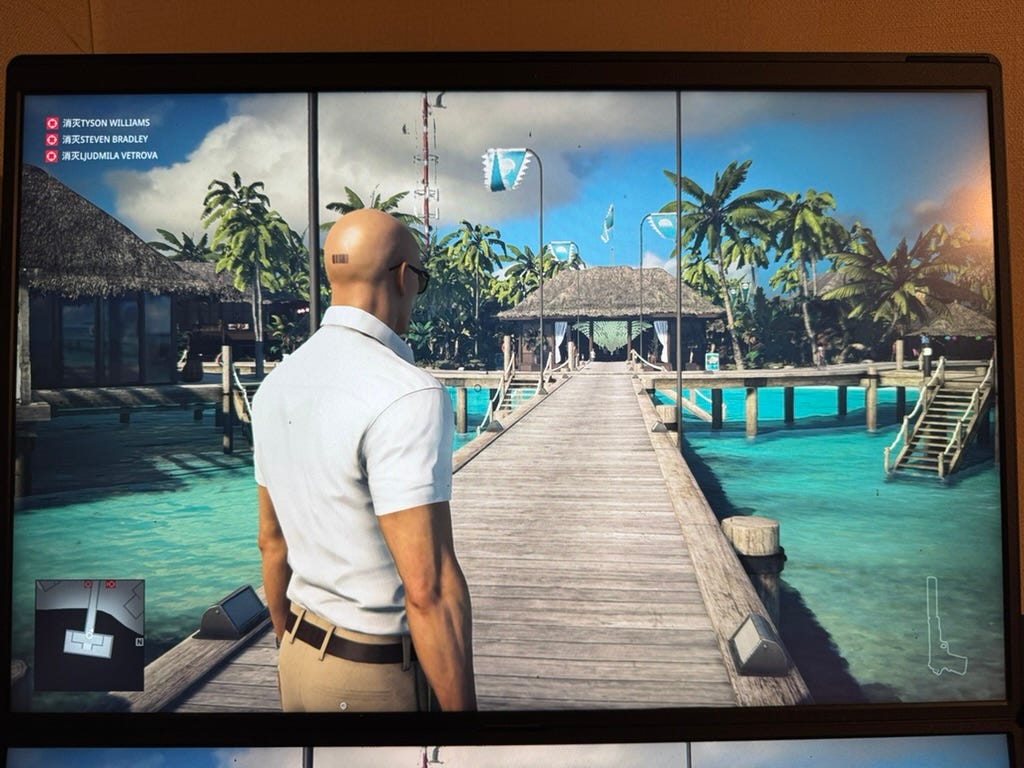
The game charged me $14. Then $59. Then $29. I didn’t notice until I’d spent over $100.
The game is Hitman. The entry price felt like a bargain, a big bundle, heaps of content, easy yes. I bought it, played a few levels, enjoyed it. Then the next chapter required an upgrade pack. Fair enough. Then the final two levels were locked behind yet another purchase.
Each step felt reasonable in isolation. Each price point was low enough to avoid real hesitation. But the architecture of the whole thing was designed to make sure I never saw the total until it was too late.
This is a product pattern worth naming: staged commitment pricing. You’re not selling the full product upfront. You’re selling the smallest believable version, building habit and sunk cost, then expanding the ask once walking away feels painful.
It works. That’s the uncomfortable part.
I see early-stage teams make the opposite mistake all the time. They either charge everything upfront (too much friction, too little trust) or give away too much for free and never build a pathway to revenue. The Hitman model is manipulative in a consumer context, but the underlying mechanic, earn commitment before expanding the ask, is genuinely sound.
The question is whether you’re using it to build genuine value or to obscure it.
If you’re designing pricing for a SaaS product right now: map out every moment your user has to make a new financial decision. Are they getting real value before each ask? Or are you just banking on sunk cost and switching friction?
The line between smart staged pricing and a dark pattern is thinner than most founders think.
The standard for conversation just moved
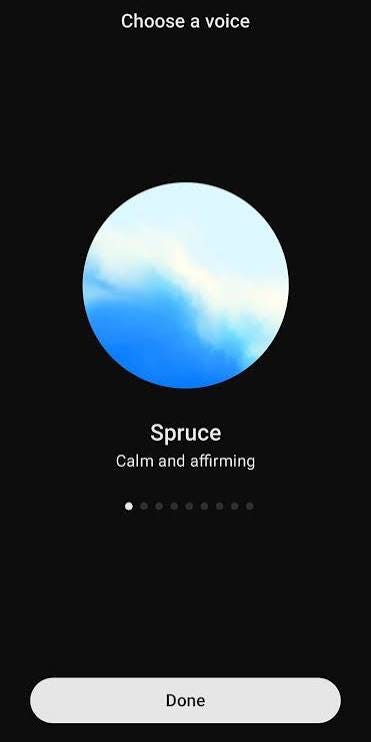
I went for a walk last night with ChatGPT talking in my ear.
Not reading, not typing. Just walking and talking, the way you would with someone you called on the phone.
At one point it said “give me a second” before answering. A small pause, like it was actually thinking. And for a moment I forgot what I was talking to.
That is the thing that got me. Not the capability. The presence. It felt like a high-intelligence person who was genuinely interested in what I had to say. That sensation, available for twenty dollars a month, on a Tuesday evening walk in Auckland.
I keep thinking about what that does to the bar we hold for human conversation. Not in a bleak way. Just honestly: the standard just moved.
Where to next
The full Raycast teardown is on the site, including the interaction model that carries all of this and what the standalone Glaze product implies about its ceiling: bearliu.com/blog/raycast-the-interaction-model
What share of your platform’s usage sits in the top 20? Hit reply with the number. I read everything that comes back.

Hello, I’m Bear.
I’m a product designer in Auckland, New Zealand. Most of my work is as a Fractional Design Partner, which usually means being the design lead a small team cannot yet hire full time.
Design Decisions is where I take one product apart each week and write up the decisions behind it. I make videos and record a bilingual podcast for much the same reason. I like working things out in the open.
bearliu.com · the full teardown library, and what I do for teams
hi@bearliu.com · the old fashioned way, and I read every reply
youtube.com/@Bearliu · a video is worth a thousand words
x.com/bearliu · shorter thoughts, as they happen