

Hello my friend!
A few days before launching CUBE, I was showing it to some founders at Hack Aotearoa, a local meetup in Auckland.
One of them liked the tool but had a problem: the blue in CUBE wasn’t their brand blue. They wanted to make marketing images, but couldn’t use graphics in someone else’s colours.
Two founders asked about using it for marketing that week. One even offered to pay.
That caught my attention. Creating branded marketing assets wasn’t really why I had built it.
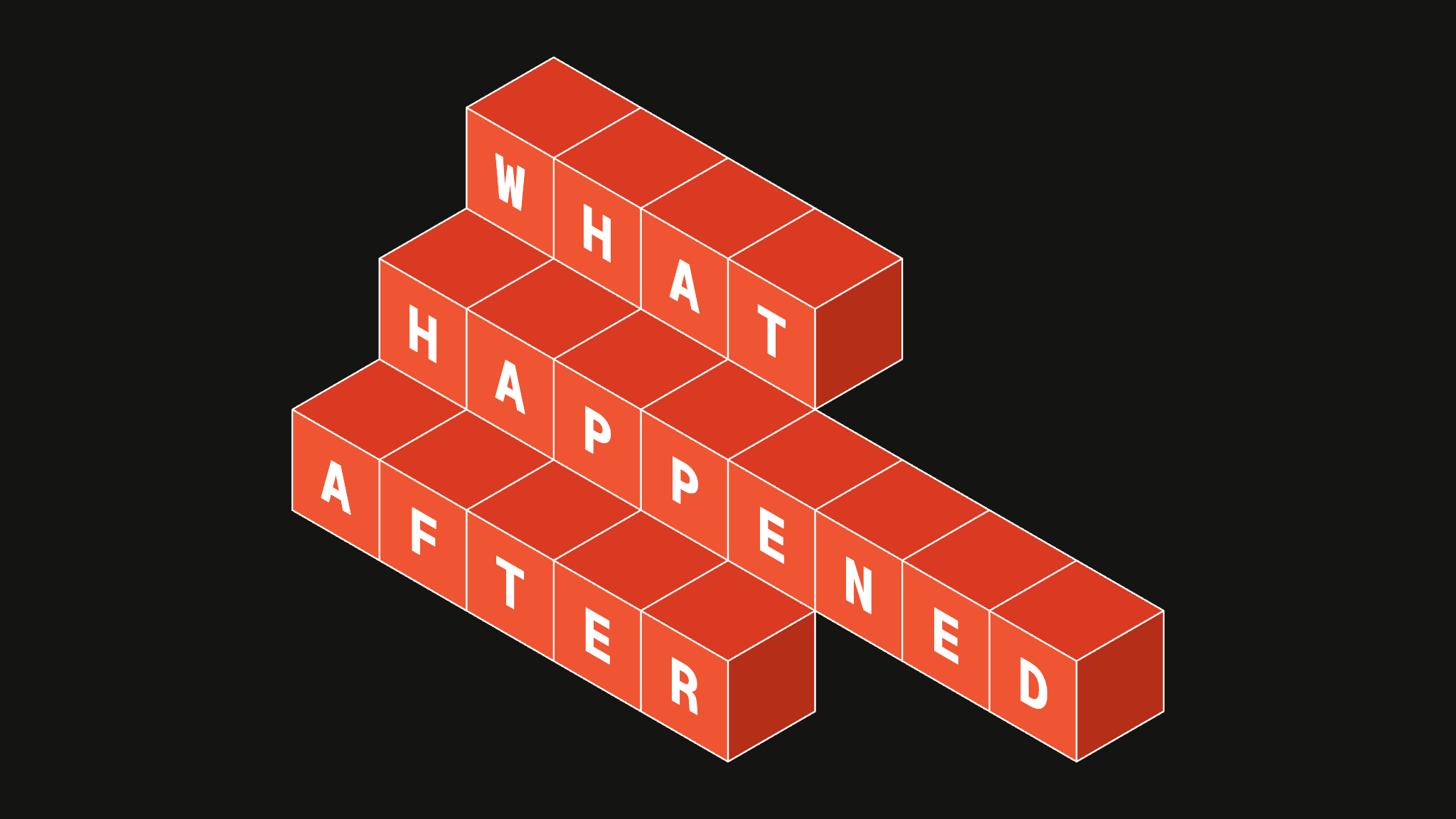
CUBE is a small web app for making 3D isometric typography. I started it as a design experiment with AI. I had imagined people making interesting text for presentations, social posts, or just for fun.
Last week I wrote about designing it. This issue is about what happened after it went live.
After launch, I started learning something else: who finds a small product like this, and what makes them actually use it?
I don’t have a growth playbook. I’m learning by trying things and paying attention to what happens.
People tried it. Did they find it useful?
CUBE went live on September 9. I shared it on LinkedIn, mentioned it to friends, and sent it to a few people who might be interested.
In the first month, around 1,200 people visited CUBE. About half typed something. 81 people exported at least one file, downloading over 200 files between them.
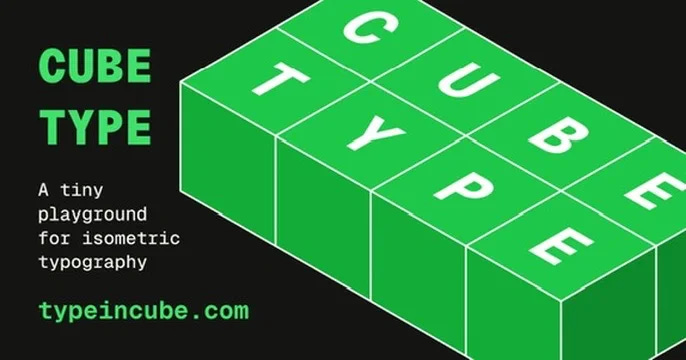
I’d designed CUBE around three words: effortless, shareable, playful. The first numbers gave me something to think about. People were willing to try it, but only around 7% took something away.
And the sharing feature barely moved. People created 25 links; those links brought in five visitors, and none exported anything.
I’d imagined people creating something, sharing it with friends, and bringing more users back. Well, that didn’t really happen.
Was the sharing interaction confusing? Were the creations not worth sharing? I don’t know yet, but at least I have better questions.
A real use case I hadn’t considered
The conversation about brand blue stayed with me.
I’d been thinking of CUBE as a creative toy. The founders were thinking about marketing graphics, a job they actually needed to do. Their images had to match an existing brand.
So I added a colour picker.
I’m careful about drawing big conclusions from two conversations. Someone saying they’d pay doesn’t mean you’ve found a market. But that simple request gave me a different way to look at the product.
People started finding it without me
One thing I’ve been learning is that distribution takes work. I can share something on social media and get visitors, but traffic usually drops soon after I stop posting.
I also can’t keep asking friends to try my latest project. Every message takes a little of their attention and goodwill.
So it was a pleasant surprise when CUBE appeared in places I hadn’t contacted.
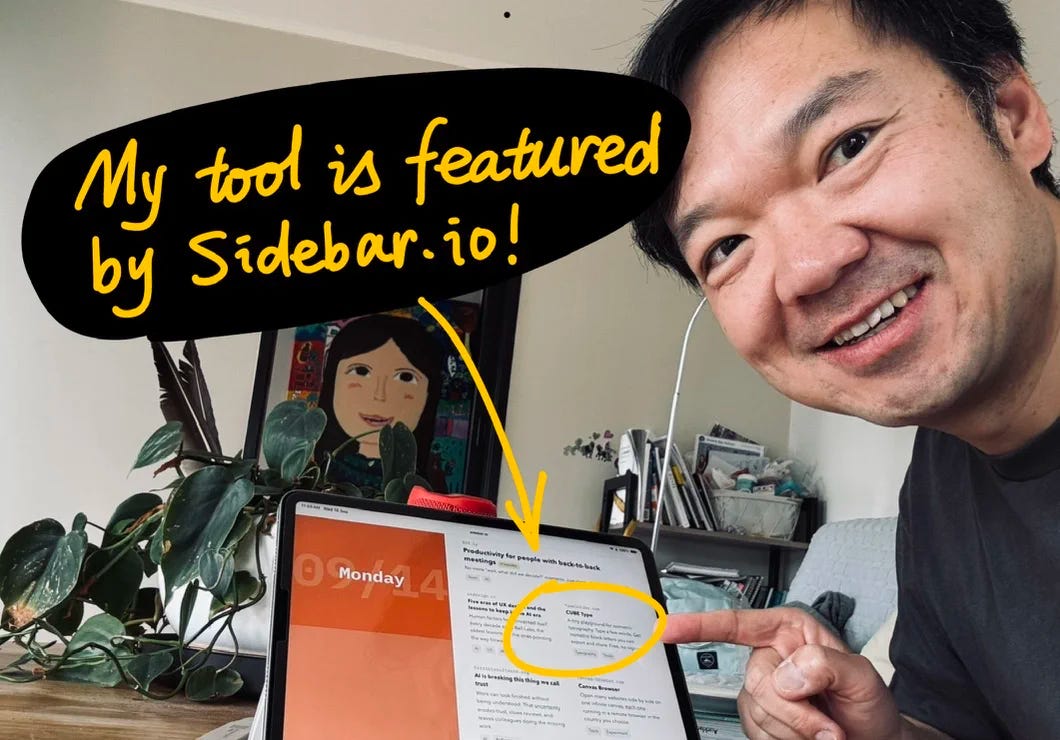
First, Sidebar featured it, sending 354 visitors in one day.
Then Dr. Web published a German review. Markus Seyfferth’s article discussed how the tool could save time in Illustrator, but also highlighted a limitation: CUBE couldn’t export SVG files.
PNG works for a quick graphic, but branding and print work often need vector files. Other people independently asked for SVG, too.
Fair point. It’s interesting how complete a product can look to its creator while real users immediately see what’s missing.
My favourite discovery
Someone saved CUBE to Pinboard. Joe Jenett found it and added it to his iwebthings collection.
From there, Sarah Honeychurch turned it into a Daily Create challenge for ds106, an open digital storytelling community.
The task was simple: use CUBE to create something.
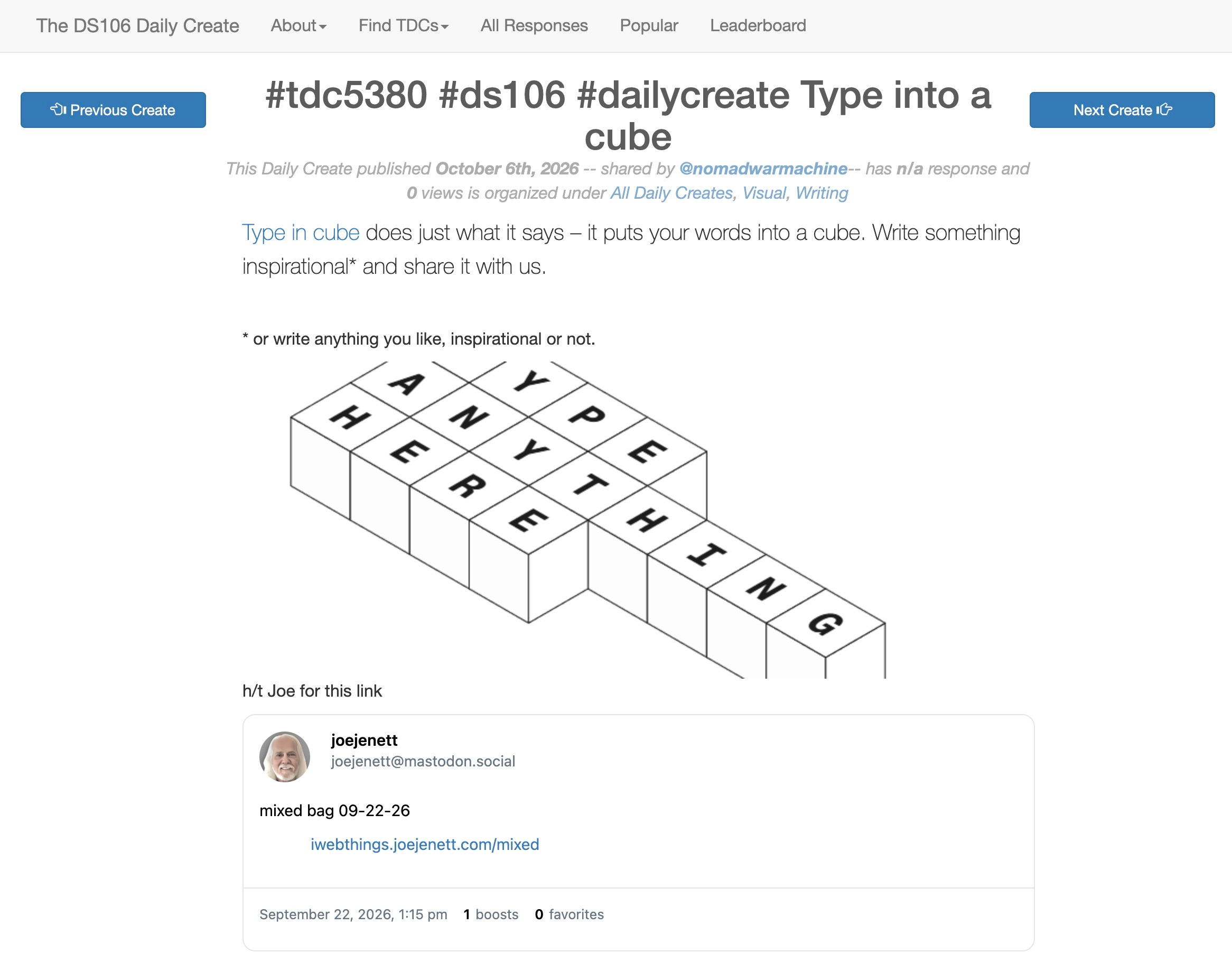
Four people I’d never met made artwork and shared it.
I’d spent no time promoting CUBE to that community. I didn’t even know it existed. I discovered it afterwards through referral traffic.
It reminded me of the old web, when we found interesting sites through blogs, bookmarks and recommendations.
Maybe there’s something here. Those people had a reason to use CUBE. Someone had given them a creative challenge. They weren’t just visiting out of curiosity.
I don’t know whether that can be repeated, but I’d like to explore it.
Then Hacker News happened
On October 10, someone I didn’t know submitted CUBE to Hacker News. I hadn’t planned or requested it.
The post reached the front page with 54 points and around ten comments.
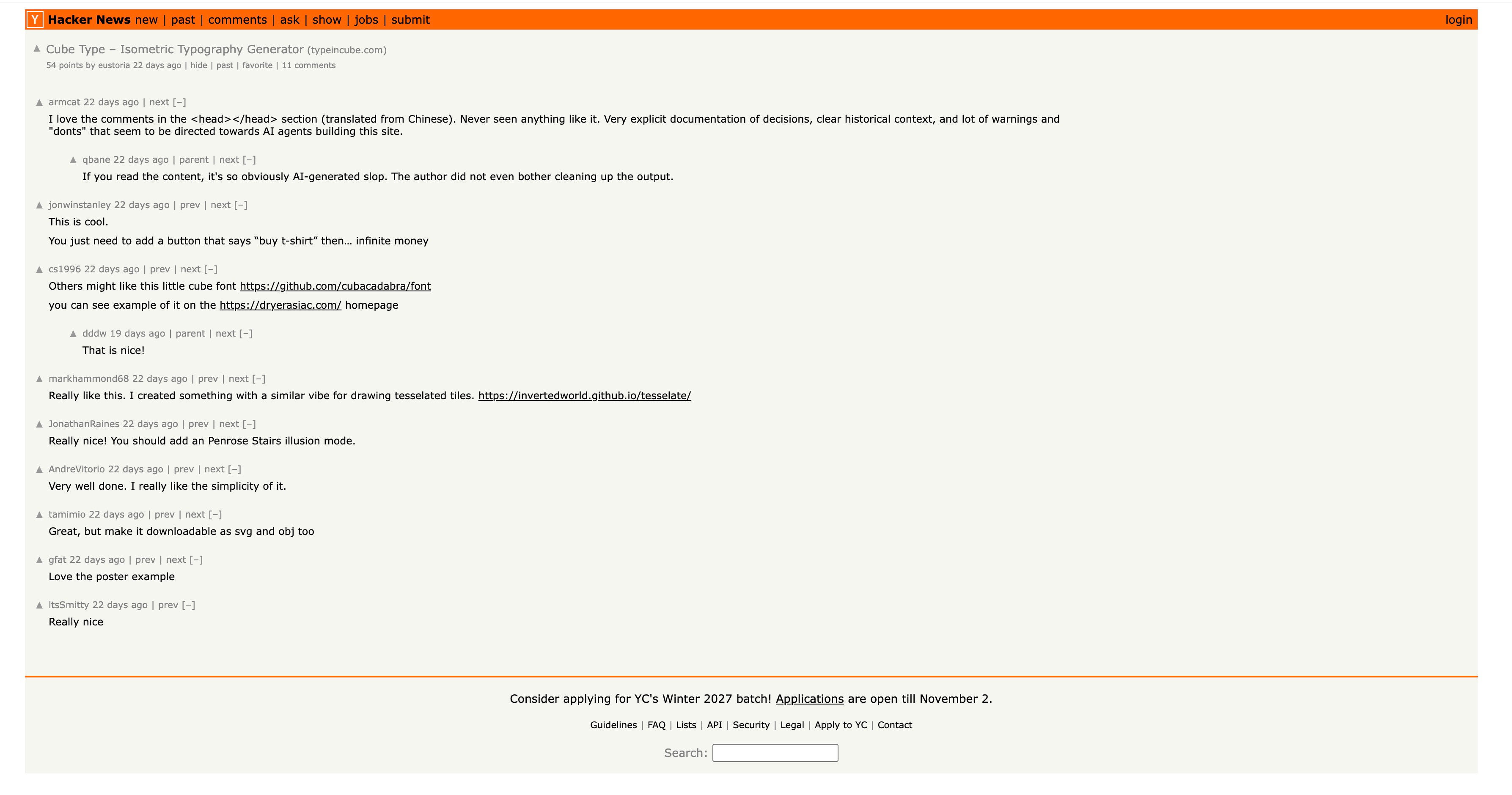
Around 2,600 people visited over the next two days, more than twice the entire first month’s traffic.
Pretty exciting, right?
But only about 60 people exported anything.
That doesn’t make Hacker News a bad channel. People discovered the product, and some might return. But it made me wonder how differently people behave depending on why they arrive.
Someone browsing Hacker News might be curious about a designer building with AI. Someone joining a creative challenge already has something to make.
Both are valuable. They just have different intentions.
A little mystery from Spain
On October 15, I noticed a strange cluster of visitors from A Coruña, Spain.
Over 47 minutes, 16 people visited, all on Windows desktops. Twelve exported 22 files.
My guess is a classroom or workshop. Maybe a teacher asked students to create something with CUBE. I can’t confirm it from the analytics.
But I love imagining that somewhere in Spain, a group was using something I made in Auckland. The internet is still pretty wonderful sometimes.
Still learning
I’ve spent years designing products, but finding customers and learning distribution is a newer challenge for me.
So far, I’m seeing that promotion can bring visitors, curators can introduce the product to entirely different audiences, and communities can find uses I hadn’t imagined. A traffic spike doesn’t necessarily mean people are getting value.
I’m curious about designers, educators and founders making marketing content. Maybe one of those groups has a real reason to use CUBE. Maybe I’ll find something completely different.
For now I’m experimenting, paying attention, and trying not to confuse attention with genuine use.
Try this on your own product
Split last month’s visitors by where they came from, and compare how many did the one thing your product is for. Traffic and use are rarely the same chart.
Then think about who already has a reason to use what you made: a class, a challenge, a job they need done. Helping them find a reason may matter as much as helping them find you.
Also from me
A few other things I have written, outside the main story.
Be good, and different
Be good, and different. That is where most of the advice stops.
The part that gets left out: do not make everything different. Everyone does A, it becomes the pattern, and the instinct is to break the pattern to stand out.
People recognise things by pattern. Break all of them and they have to learn your product from scratch. Most will not bother.
Follow the major pattern so nothing has to be relearned. Then change one small thing they will actually notice. That is the thing they remember. You, or your product.
And being good is not the differentiator. It is the floor.

Business value vs user experience
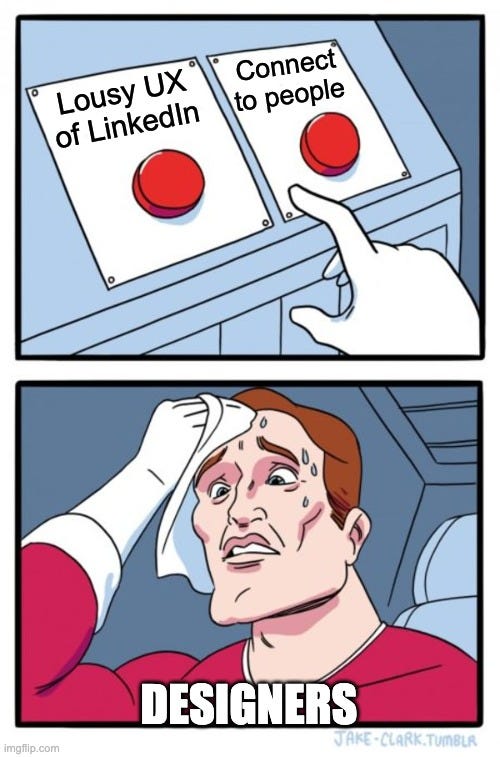
Just think about one example that business value is bigger than user experience: LinkedIn.
I find it sarcastic to post anything relevant to user experience on LinkedIn, just because LinkedIn has a shitty user experience, and it is obvious that the platform doesn’t care or prioritise it. I can easily make a list:
The algorithm never works: You are browsing the feed that doesn’t make sense to your interest, industry, or preference.
The notification is chaos. You get notified by views of your post two times a day!
Don’t get me started with the AI slops.
But why we are still using it? Consider both your clients and potential customers are on this platform, so you have to use it. So, business value beats user experience in this case.
Sad but true.
Where to next
The full CUBE story, from the first notebook page to the launch numbers, is on my site: bearliu.com/blog/building-cube-with-ai
You can also give CUBE a try.
If you’ve launched something, what’s been your most surprising source of users? Hit reply and tell me.
Thanks for reading!
Bear

Hello, I’m Bear.
I’m a product designer in Auckland, New Zealand. Most of my work is as a Fractional Design Partner, which usually means being the design lead a small team cannot yet hire full time.
Design Decisions is where I take one product apart each week and write up the decisions behind it. I make videos and record a bilingual podcast for much the same reason. I like working things out in the open.
bearliu.com · the full teardown library, and what I do for teams
hi@bearliu.com · the old fashioned way, and I read every reply
linkedin.com/in/bearliu · where most of my English writing goes first
youtube.com/@Bearliu · a video is worth a thousand words
x.com/bearliu · shorter thoughts, as they happen